There are journeys that stay with you not just for their beauty but for the peace they bring. My trip from Chandigarh to Shangarh through Mandi was one such experience—a road trip that took me from bustling city life to a Himalayan haven untouched by commercialization.

Nestled deep inside the Sainj Valley of Himachal Pradesh, Shangarh is a picture-perfect village surrounded by pine forests, rolling meadows, and traditional wooden houses. Unlike the crowded hill stations, Shangarh feels pure, quiet, and almost sacred.
This is the story of that journey—one filled with winding roads, mountain air, and moments of pure stillness.
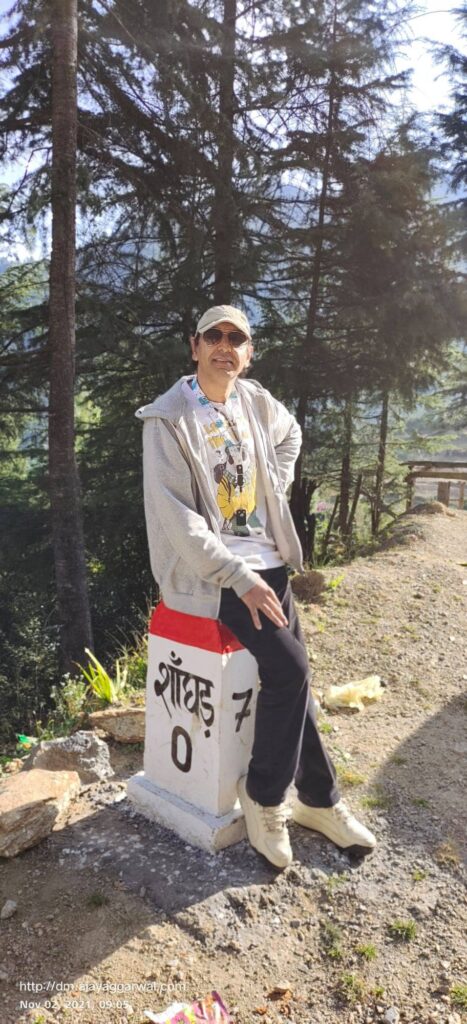
The Journey Begins: Chandigarh to Mandi
My journey started early from Chandigarh, just as the city was waking up. The morning drive on NH205 and NH154 toward Mandi was smooth, with wide roads and stunning scenery. The distance from Chandigarh to Mandi is roughly 200 kilometers, which takes about 6 to 7 hours depending on traffic.
I crossed Bilaspur and Sundernagar, making a short halt at Sundernagar Lake. The lake lies quietly beside the road, its surface glistening in the morning sun. It’s a great place to stretch your legs, sip tea from a roadside stall, and breathe in that early mountain air.
As I got closer to Mandi, the hills became steeper and greener. The Beas River accompanied me for much of the route, occasionally disappearing behind turns and tunnels only to reappear again. The drive was beautiful, with every bend revealing a new view of the valley below.
Exploring Mandi – The Temple Town by the Beas
I reached Mandi around lunchtime. The town sits gracefully on the banks of the Beas River and is often called the “Varanasi of the Hills” because of its many old temples.
My first stop was the Bhootnath Temple, a centuries-old shrine dedicated to Lord Shiva. The architecture is simple yet powerful, made of stone with intricate carvings. I also visited Tarna Temple, located on a hilltop that offers a panoramic view of the town and river below.
The lanes of Mandi are narrow but full of life—small shops selling woolen clothes, fruits, and local snacks. After exploring a bit, I had lunch at a local dhaba: steaming rajma-chawal with pickle and buttermilk. It was simple but delicious—the kind of meal that only feels complete in the hills.
After resting for a while, I set off for my next destination—Shangarh, around 75 kilometers from Mandi.
The Scenic Drive from Mandi to Shangarh
The drive from Mandi to Shangarh takes about 4 to 5 hours, depending on road conditions. The route goes through Aut, a small town on the way to Kullu, where you turn off the main highway and enter the Sainj Valley.
The moment I turned toward Sainj, the landscape changed completely. The road narrowed, pine trees grew thicker, and the river flowed right beside me. Small wooden houses appeared on terraced fields, and every village looked like something out of a postcard.
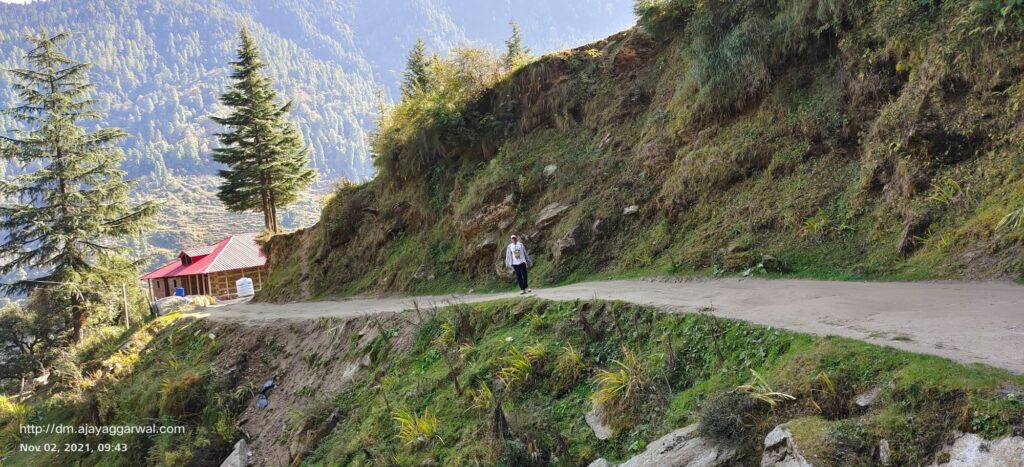
I crossed Sainj town and continued uphill toward Shangarh, the crown jewel of the valley. The final 10 kilometers were narrow but incredibly scenic. As the sun began to set, I reached Shangarh just in time to see golden light falling on its famous meadows.
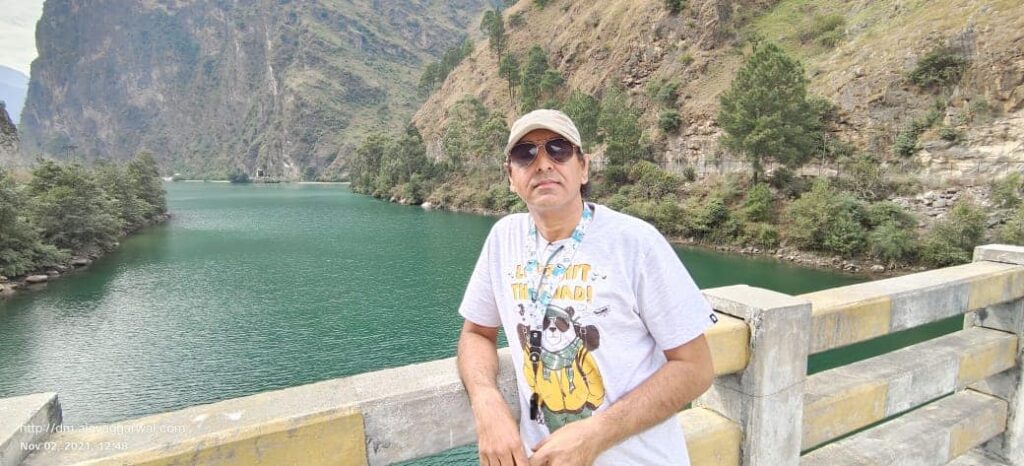
Arrival at Shangarh – Where Time Stands Still
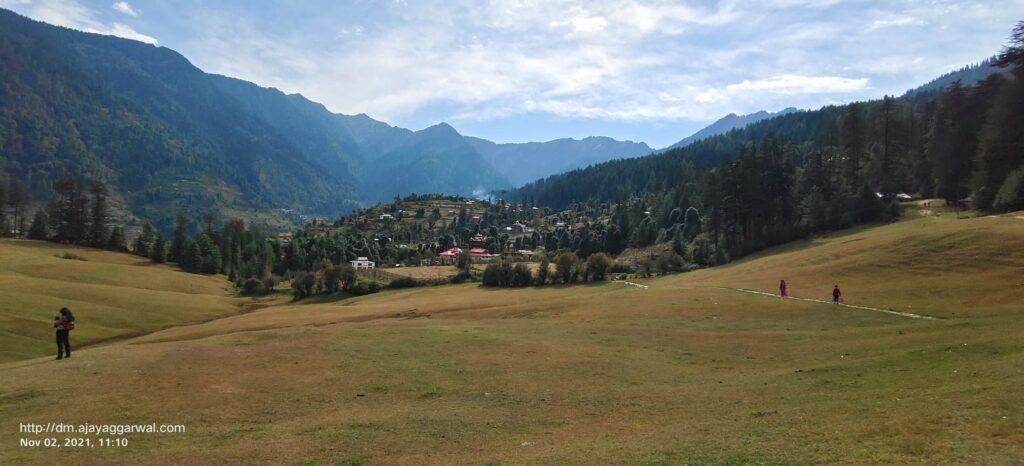
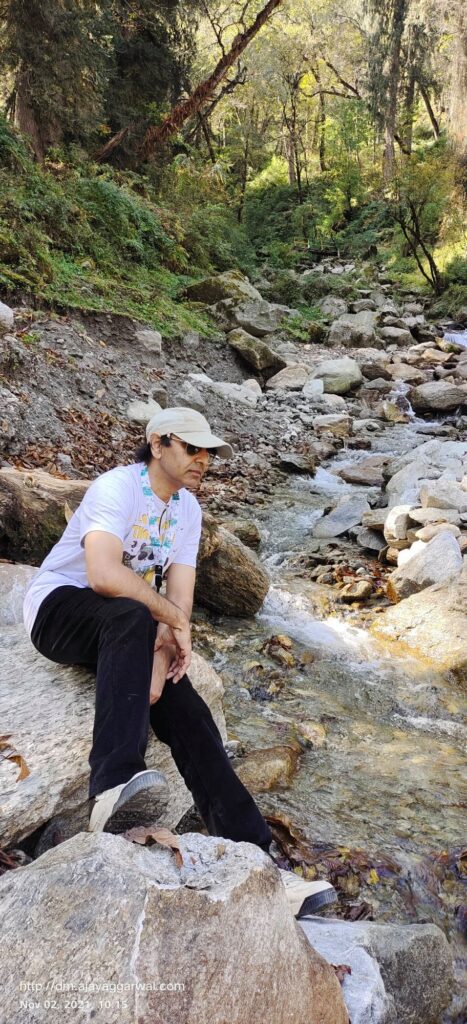
The first thing that struck me about Shangarh was its silence. There were no crowds, no traffic, no loud music—just the sound of wind moving through pine trees. The village sits at about 6,400 feet, surrounded by the Great Himalayan National Park (GHNP), a UNESCO World Heritage Site.
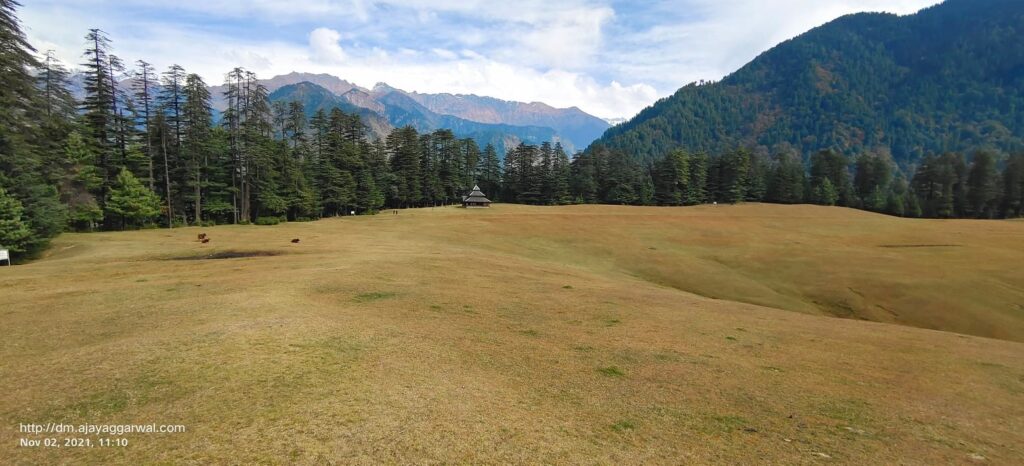
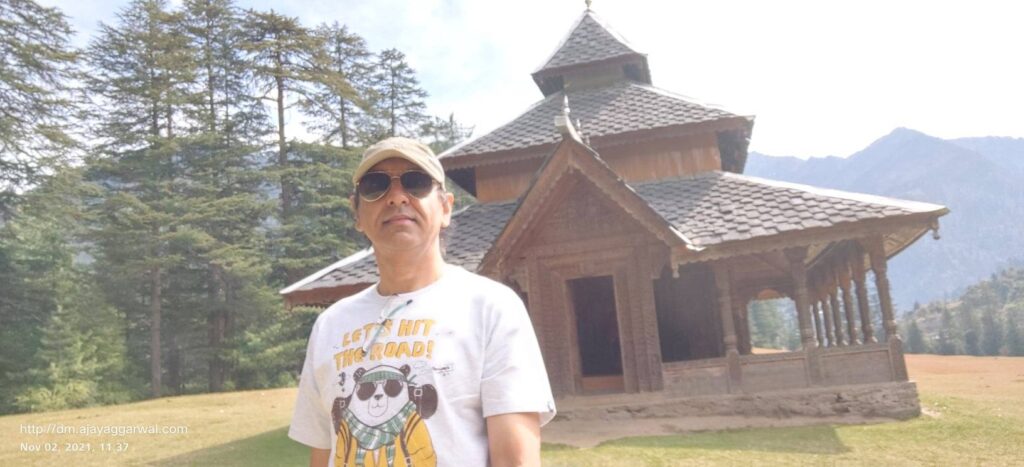
At the heart of Shangarh lies the Shangarh Meadow, a vast green field with the Shangchul Mahadev Temple standing proudly on one side. The sight of that open meadow, framed by dense deodar forests and snow-capped peaks, felt almost surreal. It was peaceful in a way that words can’t fully describe.
Shangchul Mahadev Temple – The Soul of Shangarh
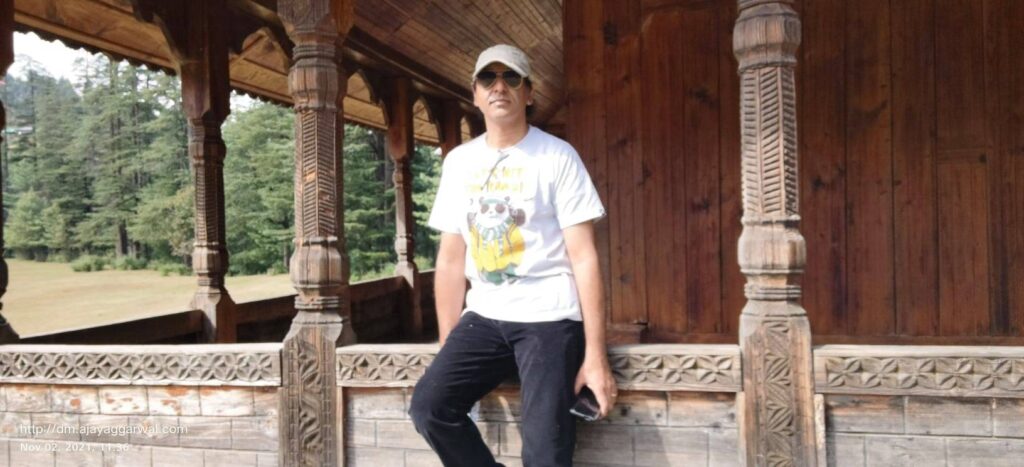
The Shangchul Mahadev Temple is the spiritual and cultural center of Shangarh. Built in traditional Himachali architecture with wooden carvings and slate roofs, the temple is dedicated to Lord Shangchul, a local deity believed to protect the valley.
According to legend, Lord Shangchul granted refuge to the Pandavas during their exile. The large meadow in front of the temple is said to be sacred, and locals believe that plowing or construction on it is forbidden.
I spent nearly an hour just sitting there, watching shepherds pass by and children playing cricket in the distance. As the sun dipped behind the mountains, the sky turned pink and orange, and the temple bells echoed softly through the valley—it was a truly divine moment.
Exploring the Beauty Around Shangarh
Shangarh is small, but every corner feels like a new discovery. Here are a few highlights worth exploring:
1. Shangarh Meadows
The meadows are the heart of Shangarh and the perfect spot to relax, meditate, or simply do nothing. Early mornings are especially beautiful when fog rolls in from the forest and sunlight filters through the mist.
2. Barshangarh Waterfall
A short hike from the village takes you to Barshangarh Waterfall, hidden deep inside the forest. The sound of the water falling amidst pine trees makes it an ideal spot for photography or quiet reflection.
3. Raila and Lapah Villages
If you love walking through traditional Himachali villages, visit Raila and Lapah. They’re known for their old wooden houses, intricate carvings, and panoramic views of the Sainj Valley. The local people are warm and welcoming, often inviting visitors for tea or a chat.
4. Great Himalayan National Park (GHNP)
Shangarh serves as an entry point to the Great Himalayan National Park, one of India’s richest biodiversity zones. It’s home to species like Himalayan blue sheep, musk deer, and snow leopards. Even a short hike toward the park’s boundary gives you a glimpse of untouched Himalayan wilderness.
5. Local Temples and Fairs
Apart from the main temple, the village hosts several smaller shrines and local festivals throughout the year. If you visit during a fair, you’ll get to witness traditional Himachali music, dance, and rituals that have remained unchanged for generations.
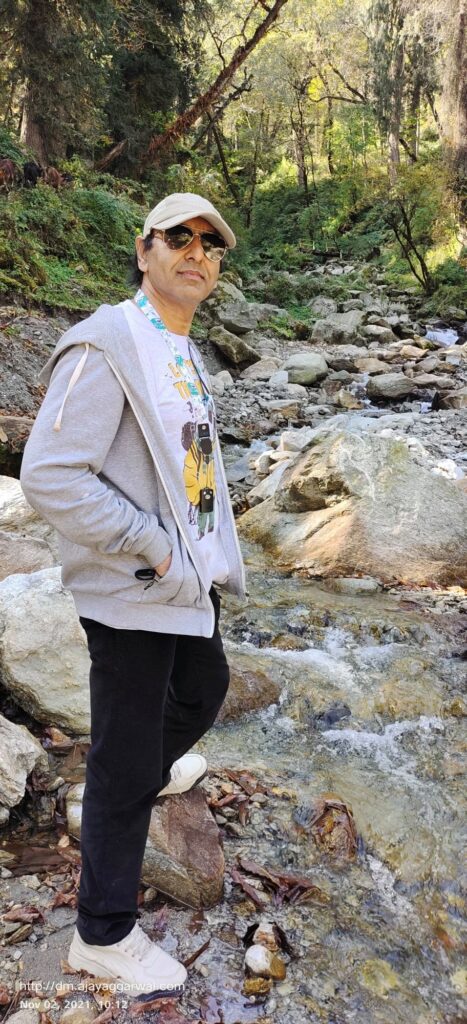
Staying in Shangarh
Accommodation in Shangarh is limited but growing. There are a few homestays and small guesthouses that offer a comfortable stay with home-cooked food. I stayed in a wooden homestay overlooking the meadow. The family cooked siddu, rajma, and ghee-soaked rotis for dinner — authentic Himachali food made with love.
At night, the sky was filled with stars, clearer than I’d ever seen before. There’s almost no light pollution here, and the Milky Way was clearly visible. Sitting outside under a blanket of stars, with the sound of distant crickets and the occasional temple bell, was one of the most peaceful moments of the trip.
Best Time to Visit Shangarh
The best time to visit Shangarh is between March and June or September and November. Summers are pleasant with temperatures ranging from 10°C to 25°C, while winters can be cold but beautiful if you enjoy snow.
Monsoon months (July–August) should be avoided due to landslides and slippery roads, though the valley looks lush and green during that time.
Tips for Travelers
-
Drive carefully: The last stretch to Shangarh is narrow, so it’s best to drive during daylight.
-
Carry cash: There are no ATMs or fuel stations near Shangarh. The nearest one is in Aut or Sainj.
-
Stay connected: Mobile network is limited, especially for some carriers.
-
Respect local traditions: The meadows are sacred to the villagers, so avoid littering or loud behavior.
The Return Journey
Leaving Shangarh wasn’t easy. On my last morning, I woke up early to see the sunrise over the meadows. Mist floated over the grass, birds chirped in the distance, and the temple bells rang softly. It felt like time had stopped.
The drive back through the Sainj Valley toward Mandi and then Chandigarh was just as beautiful. But this time, the journey felt slower — as if I was carrying a piece of Shangarh’s calmness with me.
Final Thoughts
My visit to Shangarh was more than just a weekend getaway; it was an experience in stillness and simplicity. Unlike popular hill stations, Shangarh hasn’t been overrun by hotels or crowds. It’s one of those rare places where nature, spirituality, and culture exist in perfect harmony.
If you’re planning a road trip from Chandigarh and want to explore an untouched corner of Himachal, Shangarh should be at the top of your list. It’s ideal for travelers who crave peace, photographers seeking natural beauty, or anyone who wants to reconnect with nature and themselves.